
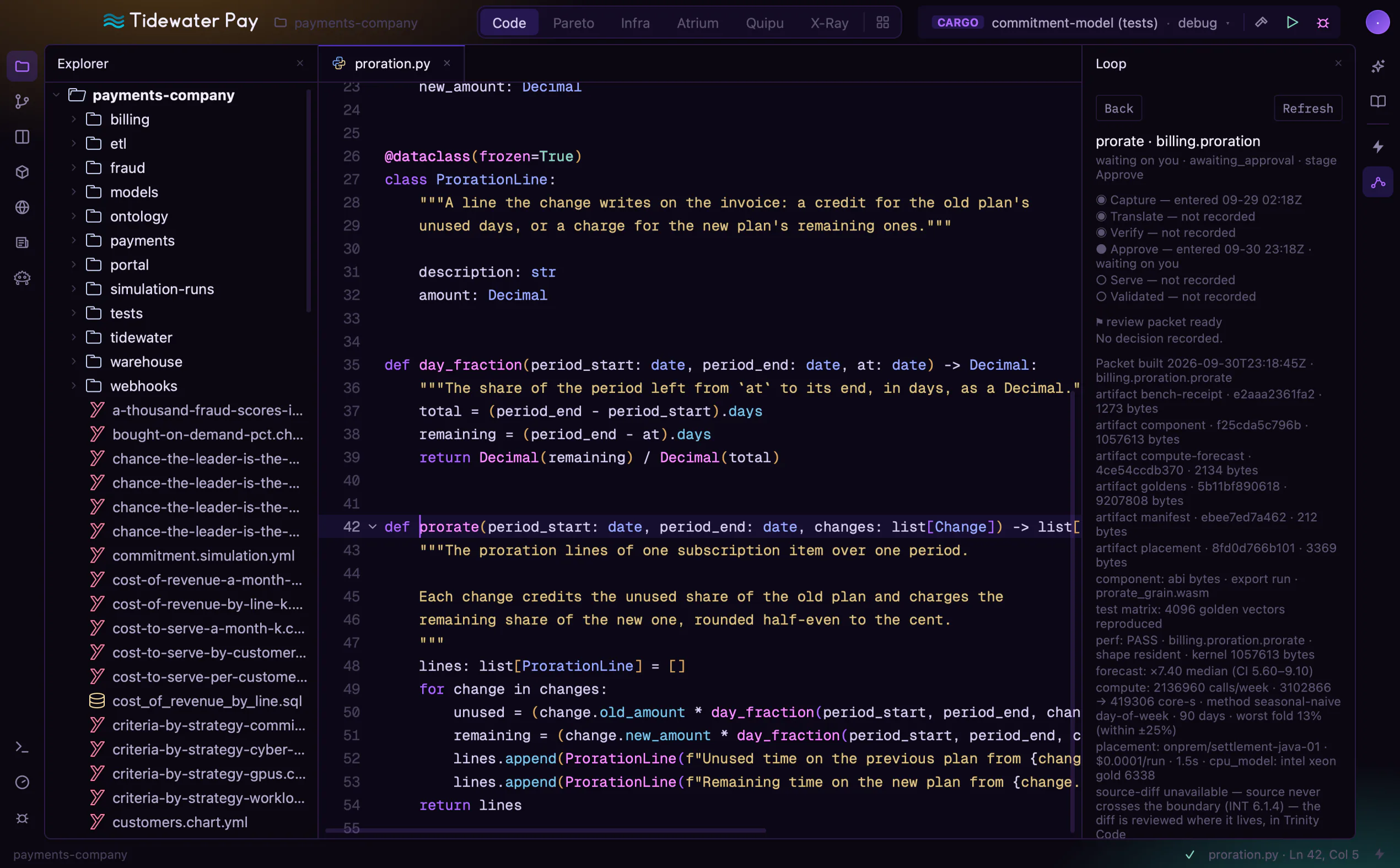
Overview
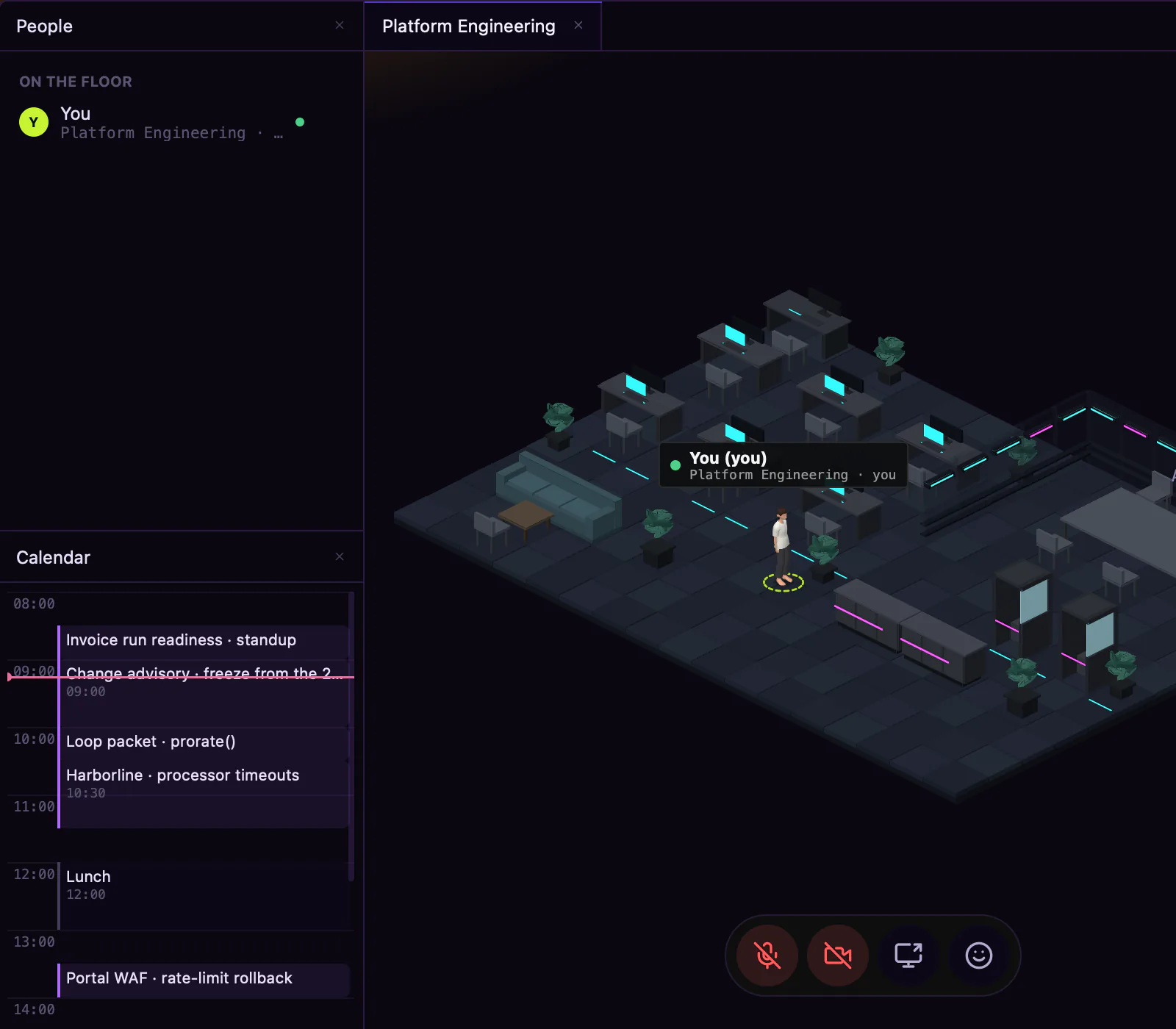
FlexLab is a unified workbench: Code, Build, Browse, Board, Connect, Benchmark and more under one mode switcher, native on desktop, in the browser, on iOS and Android. It hosts the loop end to end: the telemetry feed from Assess, the translation engine, the benchmark receipts and the compute grid's pins.
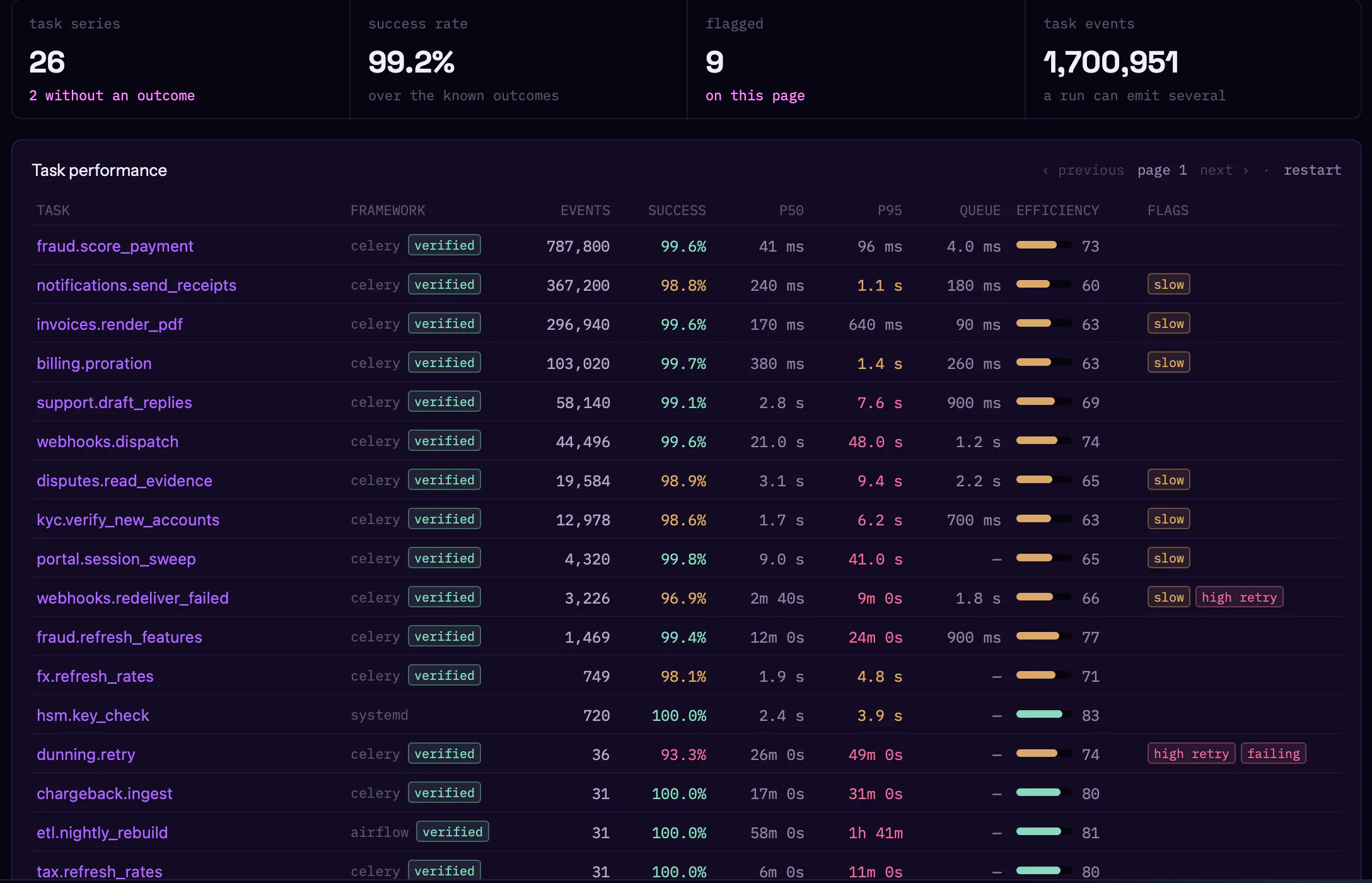
Production's most expensive functions, in your editor.
- Task efficiency and task demand joined per function: failure rate, latency percentiles, peak CPU, calls per day, cadence
- Ranked by what it costs, with confidence attached
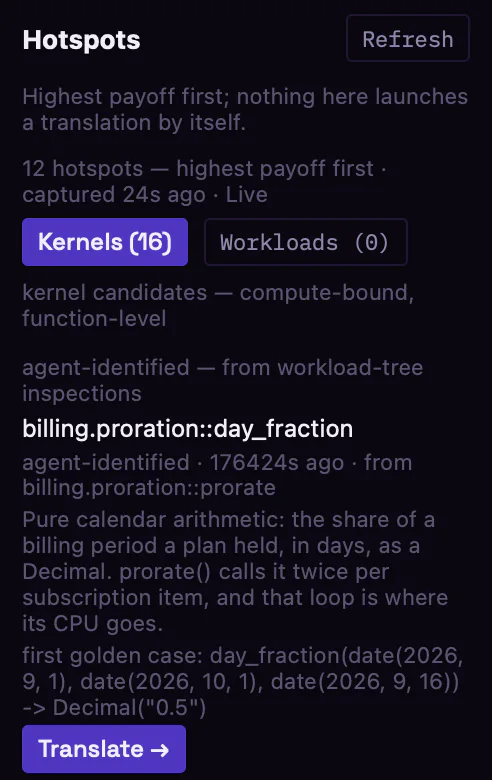
- One click hands the unit to an agent together with its golden cases
Any agent. One permission boundary.
- Claude, Codex, Copilot, Grok or any Agent Client Protocol agent, in the same panel
- Typed tools behind a permission boundary: list_hotspots, first_golden_case, placement_quote, report_kernel_candidate, rebuild_grain, deploy_grain
- Plan, act, observe with checkpoints and undo; termination ceilings, no runaway loops
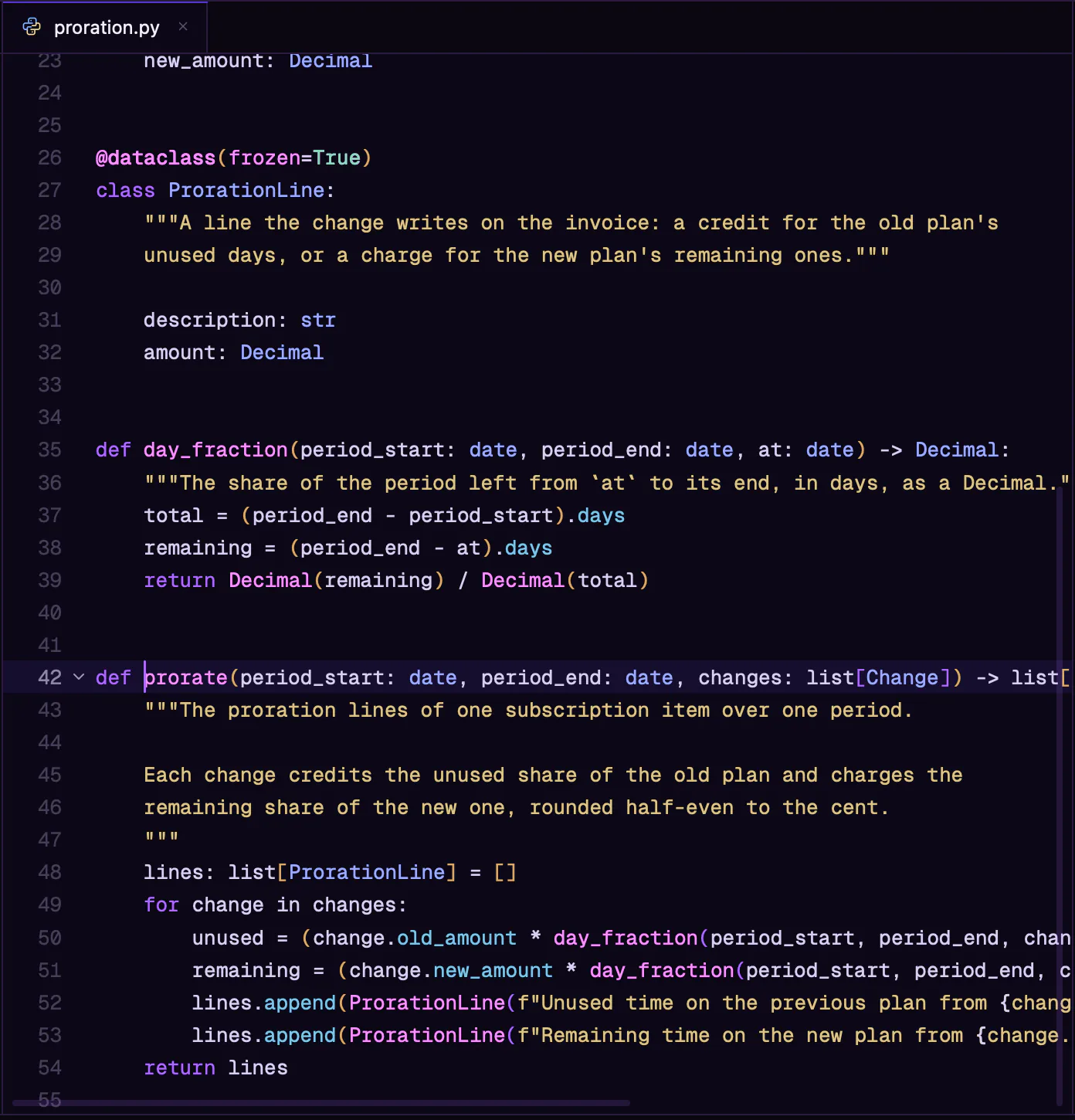
A native editor, not a web view.
- Rust and GPUI, GPU-rendered, local-first: opens in milliseconds and stays fast on large trees
- Multi-mode editor: code, grid, rich text, VIM
- Edit prediction from Copilot, Codestral or a local Ollama
Shared sessions with signed provenance.
- CRDT documents that converge, over WebTransport
- Every edit carries an ed25519 signature: who changed what, provably
- Voice inside the session, no third-party call
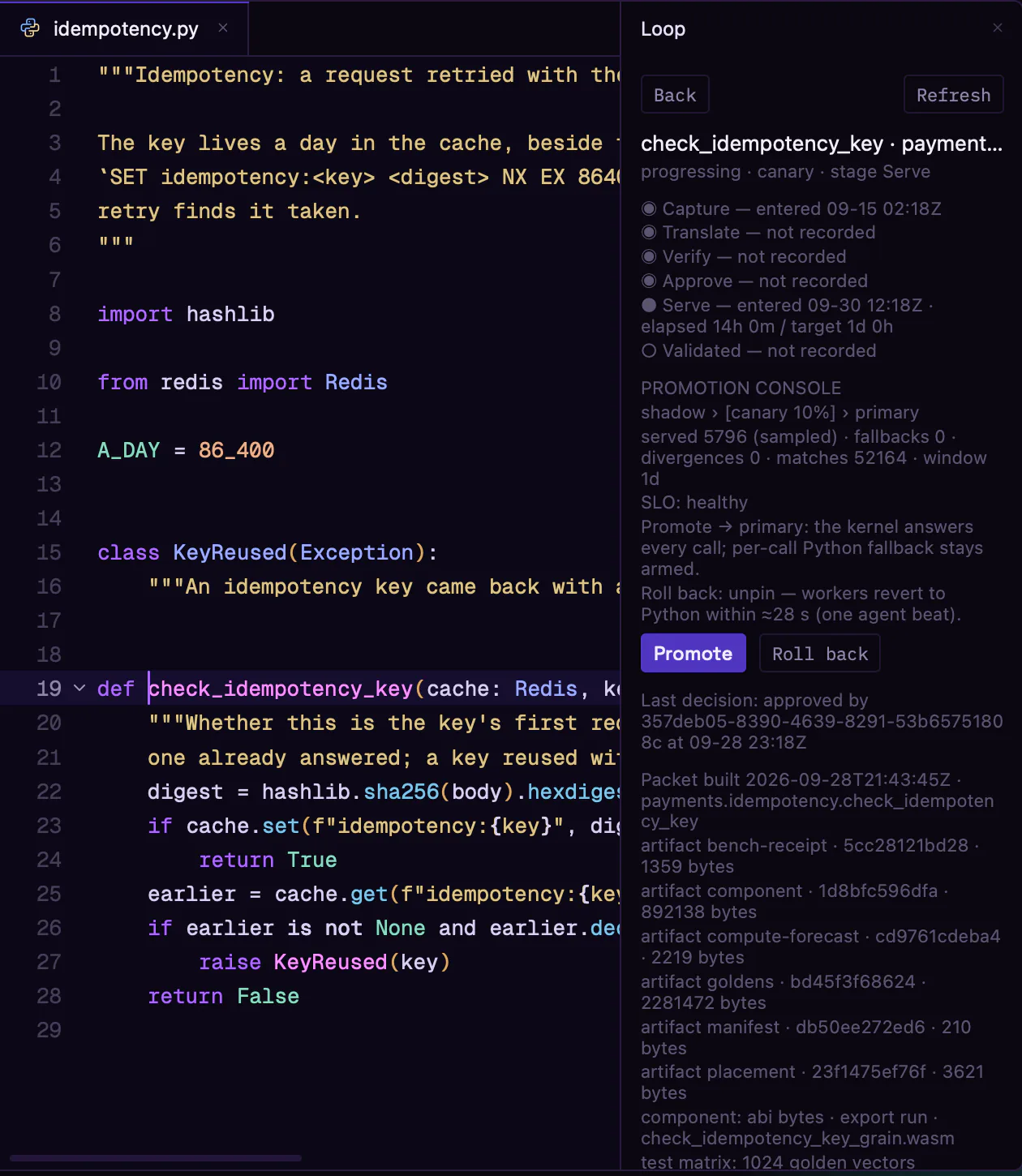
Approve a receipt. Deploy to shadow. Roll back.
- Nothing deploys without an approved receipt
- A deploy lands as a shadow pin; promotion is a separate, guarded step
- A rebuilt grain must earn its receipt again
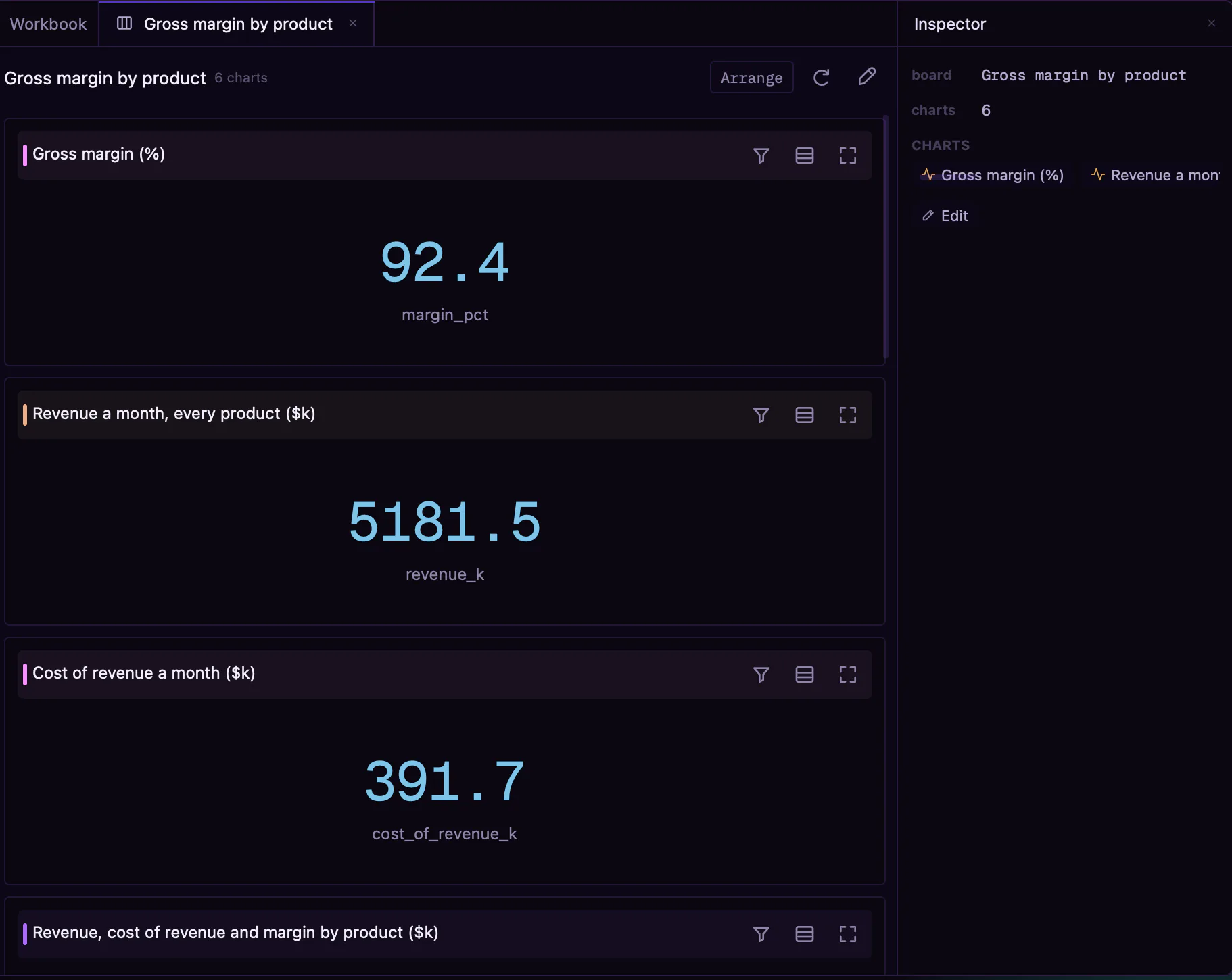
The rest of the workbench.
- Sheet, diagrams and news live beside the code, not in another tab
- Extensions run as WASM in a jail
- Signed self-update; entitlement leases verifiable offline
BEFORE YOU START
Before you start
Do we have to switch editors?
No. The loop is also exposed as MCP tools and a VS Code extension. The workbench is where it is fastest, not the only place it runs.
Which agents?
Claude, Codex, Copilot and Grok today, plus any agent speaking the Agent Client Protocol. All behind the same typed tools and permission boundary.
Where does it run?
Native on macOS, Windows and Linux, in the browser, and on iOS and Android.
What's next
Start with the 48-hour assessment or bring one workload. We agree the scope in the first conversation.