
Overview
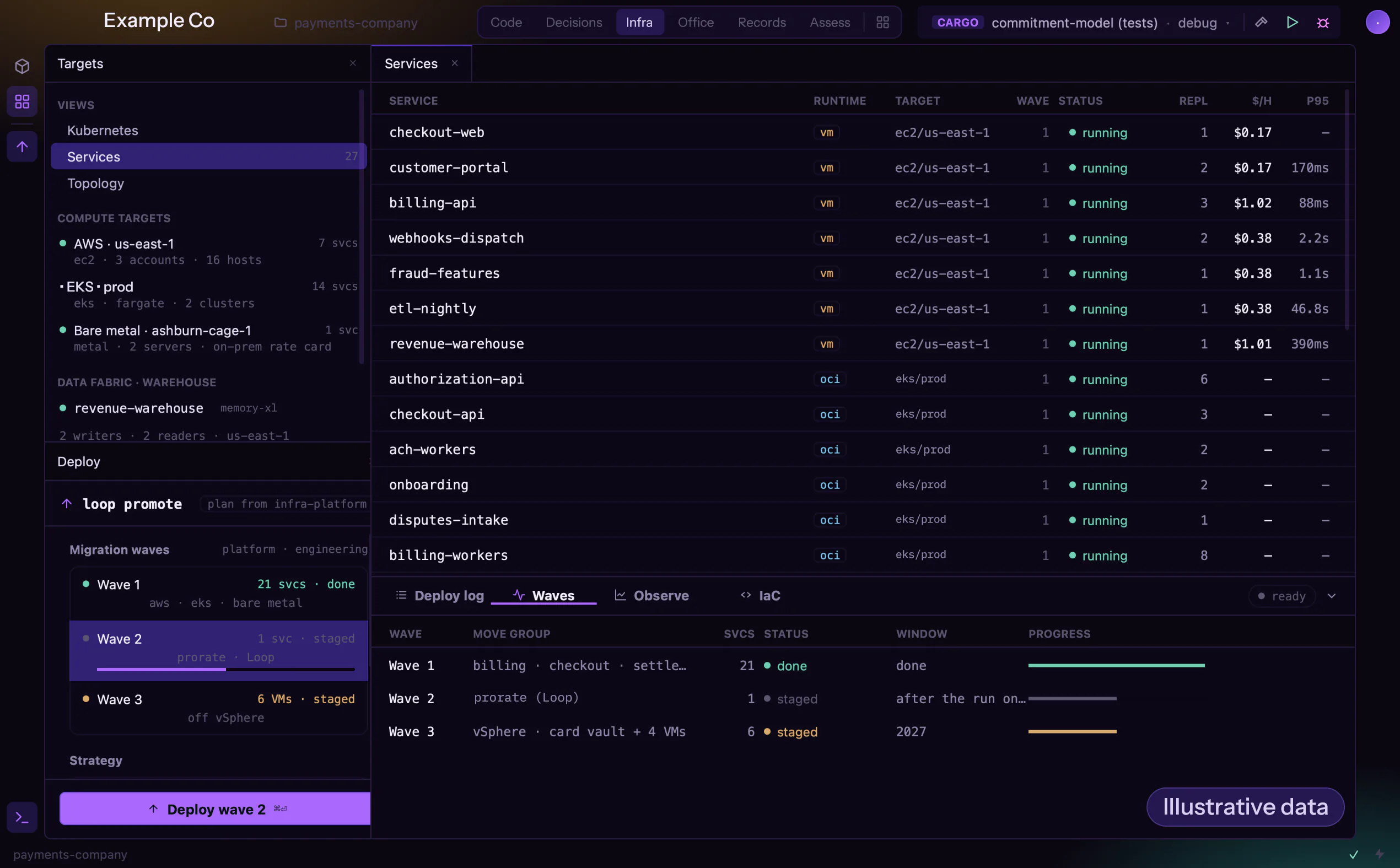
Until now, every new architecture, cloud provider or contract meant another migration project. The compute grid runs work on any machine you enroll, survives losing any one of them, and verifies the result when the machine is not yours. Modernize once, move anytime is a property of the code, not a promise on a slide.
One workload, any target.
- x86, ARM, RISC-V, GPU targets and WebAssembly at the edge, from one source
- Modernize once, move anytime is a property of the code
- Every new architecture used to mean a re-code. Not anymore
Any machine. Any failure.
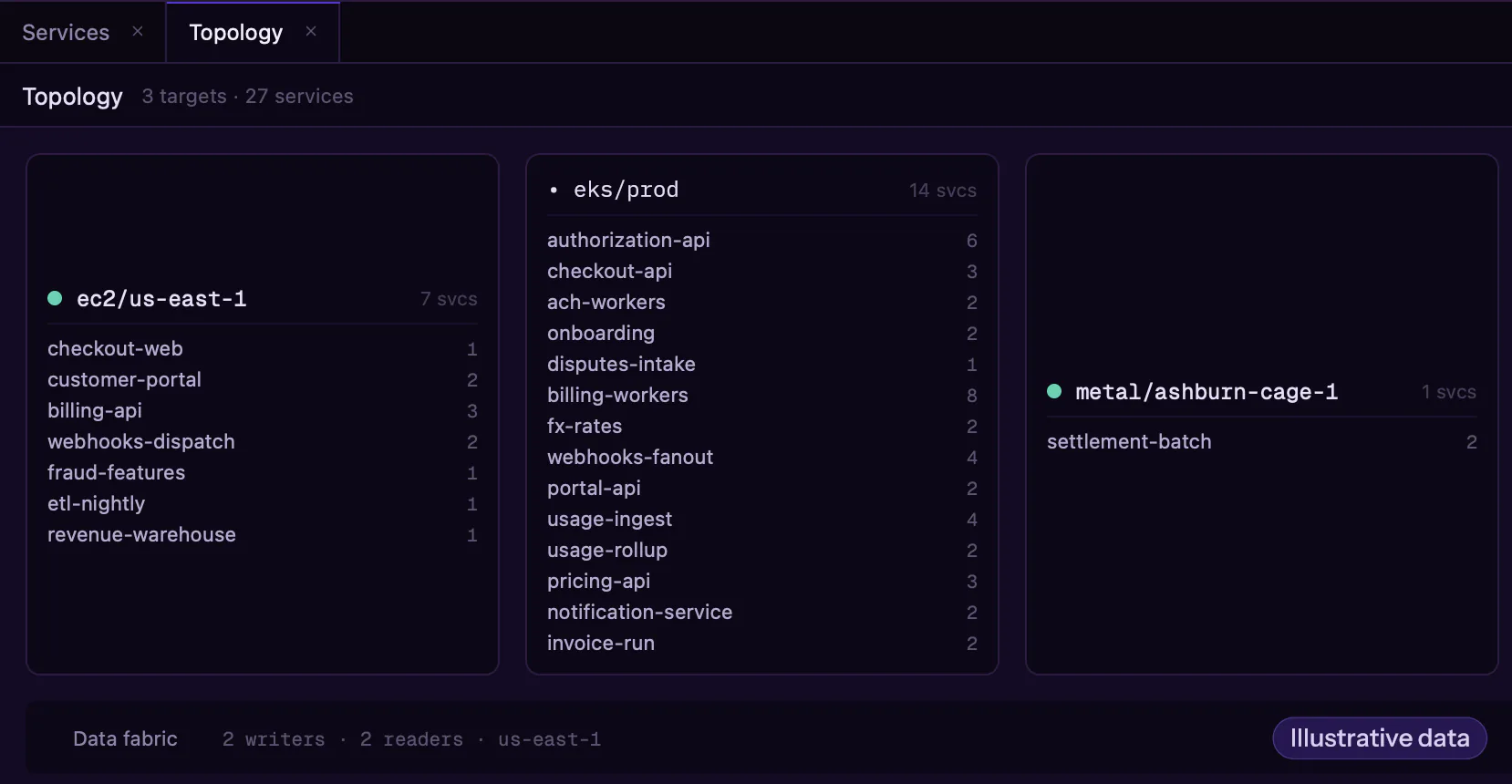
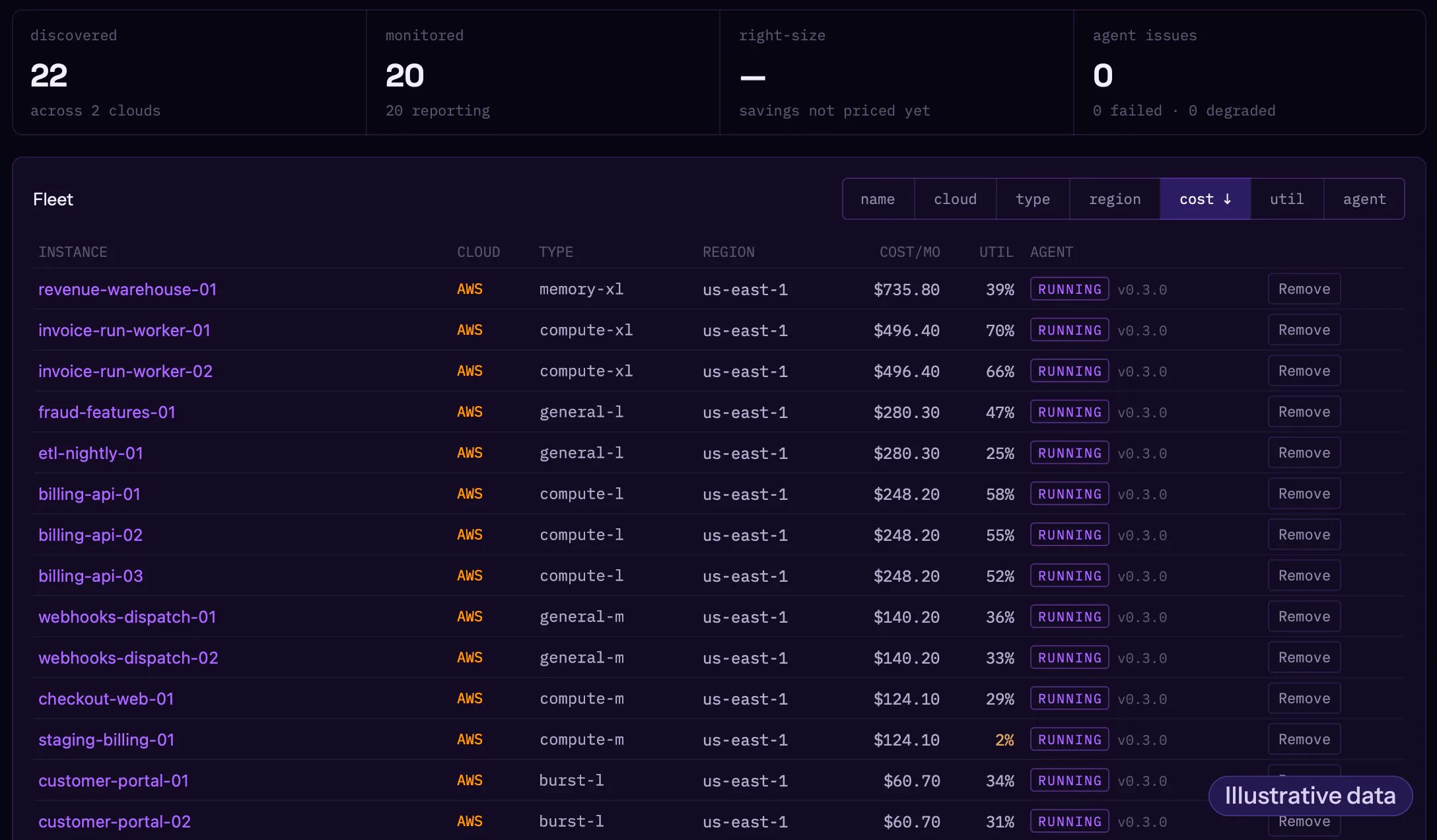
- Work runs on any machine you enroll: your cloud, your data center, the edge
- A machine that fails mid-job costs time, never the result
- Work from machines you don't fully trust is verified before it counts
Your machines join with consent, and leave cleanly.
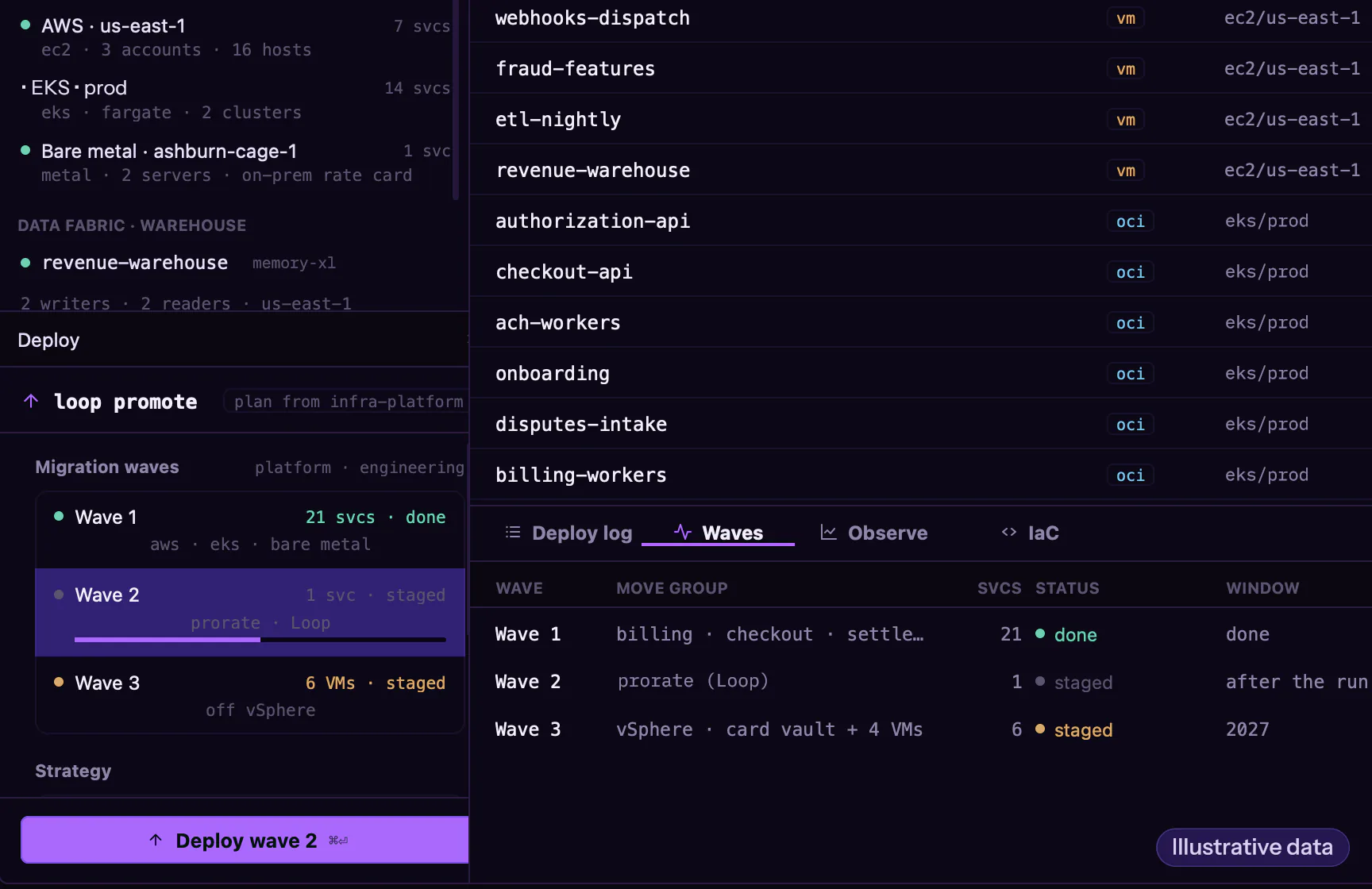
- Each node has its own identity and the trust level you assign
- A node can leave at any time; its work is picked up elsewhere
- Agents verify every module before running a byte; keys rotate; drains are graceful
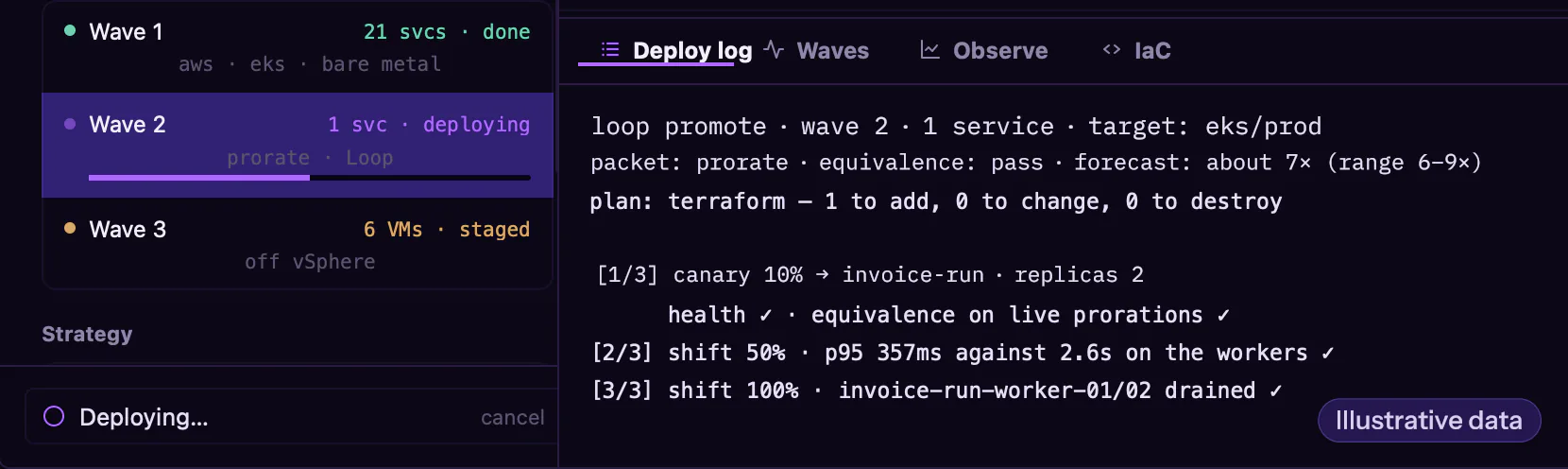
Born in shadow. Promoted one step at a time.
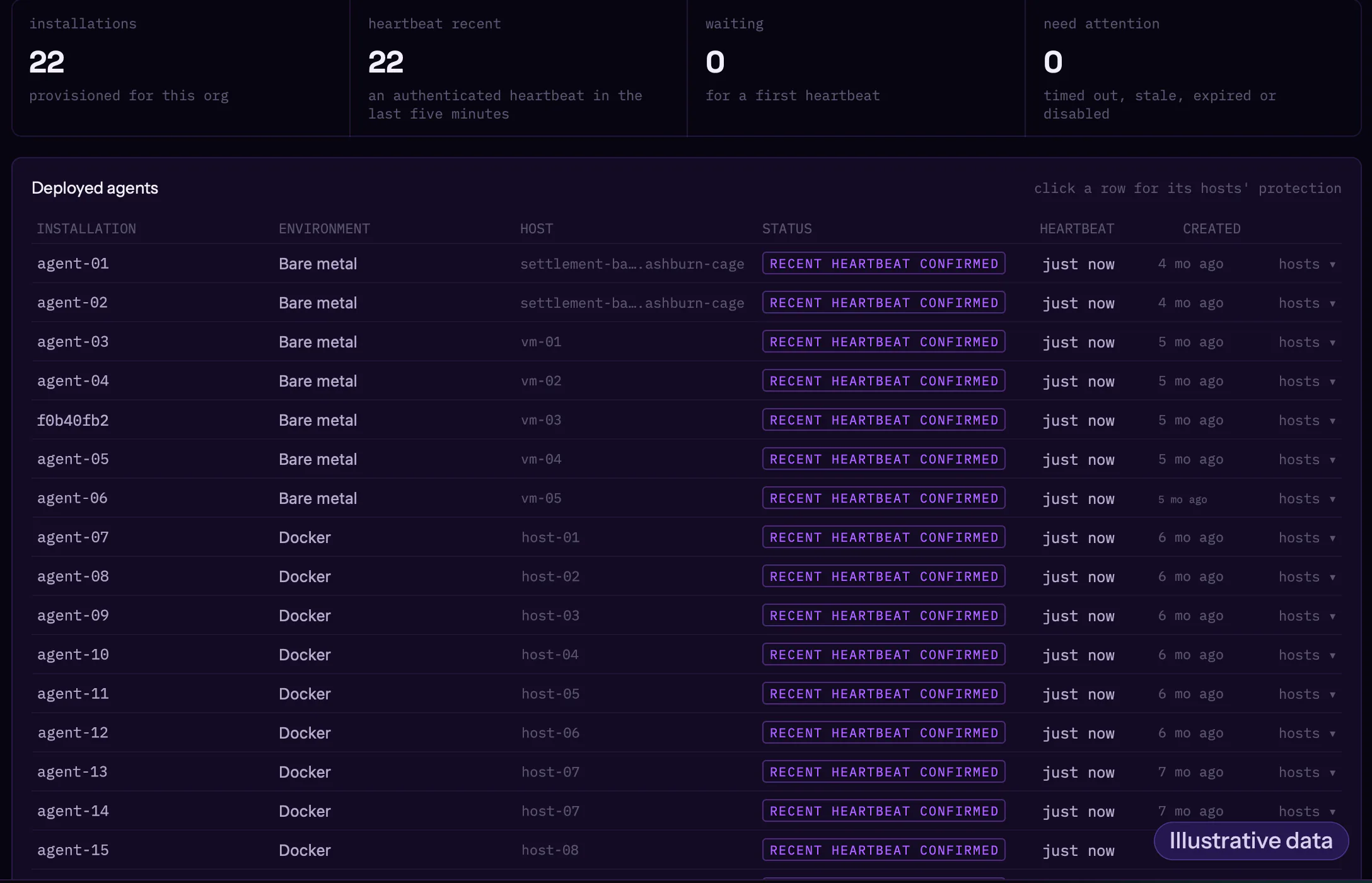
- A pin starts in shadow and moves up a guarded ladder, one step at a time
- Approval bound to the exact bytes that were tested
- Rollback rehearsed before the first byte moves, and triggered by the monitor on breach
Faster, without touching the tenant's code.
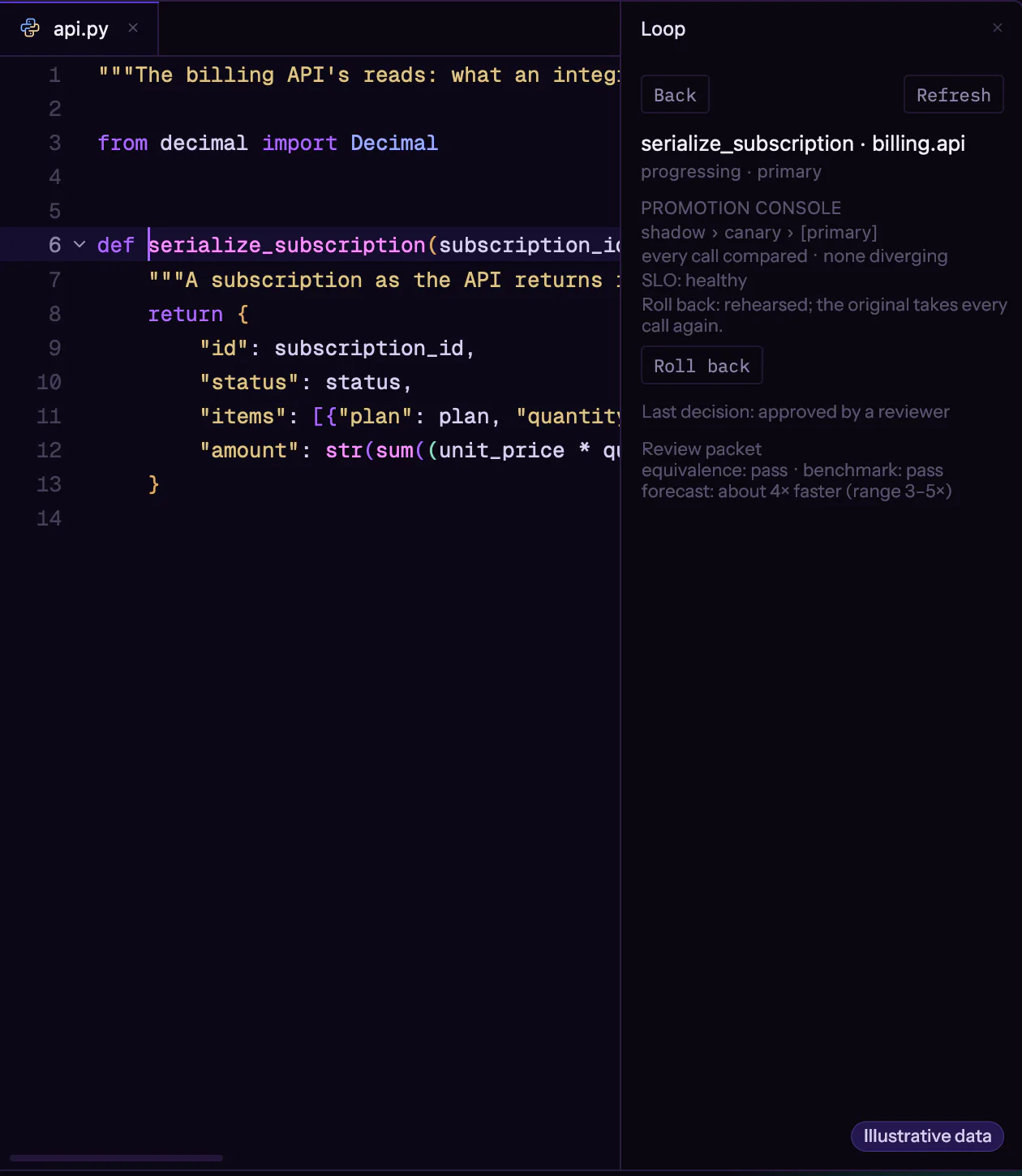
- A translated kernel serves beside your existing code; the application does not change
- The original still answers if the kernel declines: fallback is the design, not the incident
- Serving telemetry feeds the outcome monitor and the forecast
Signed from build to self-update.
- Release keys held offline; release tooling never ships in images
- Every update verified before it applies
- A usage statement you can read
BEFORE YOU START
Before you start
Does the application change?
No. The kernel lives beside the original process and the workload moves without touching the application.
Who approves a rollout?
Your team. Every rollout is tied to the exact build that was tested and to the recorded approval.
What if a target underperforms?
The outcome monitor flags or rolls back, and the evidence travels with the workload, so the next placement is as cheap as the last.
What's next
Start with the 48-hour assessment or bring one workload. We agree the scope in the first conversation.