
Overview
Modernization programs rarely fail on technology. They fail on sequencing: plans that live in meetings, dependencies discovered mid-cutover, one all-or-nothing weekend. The engine starts from the workloads the assessment shows are costing the most, captures their real inputs, plans the waves from the module graph, translates through a knowledge base and a memo cache, repairs with the compiler as the oracle, and ships nothing without an equivalence verdict. We modernize workloads. We don't wrap them.
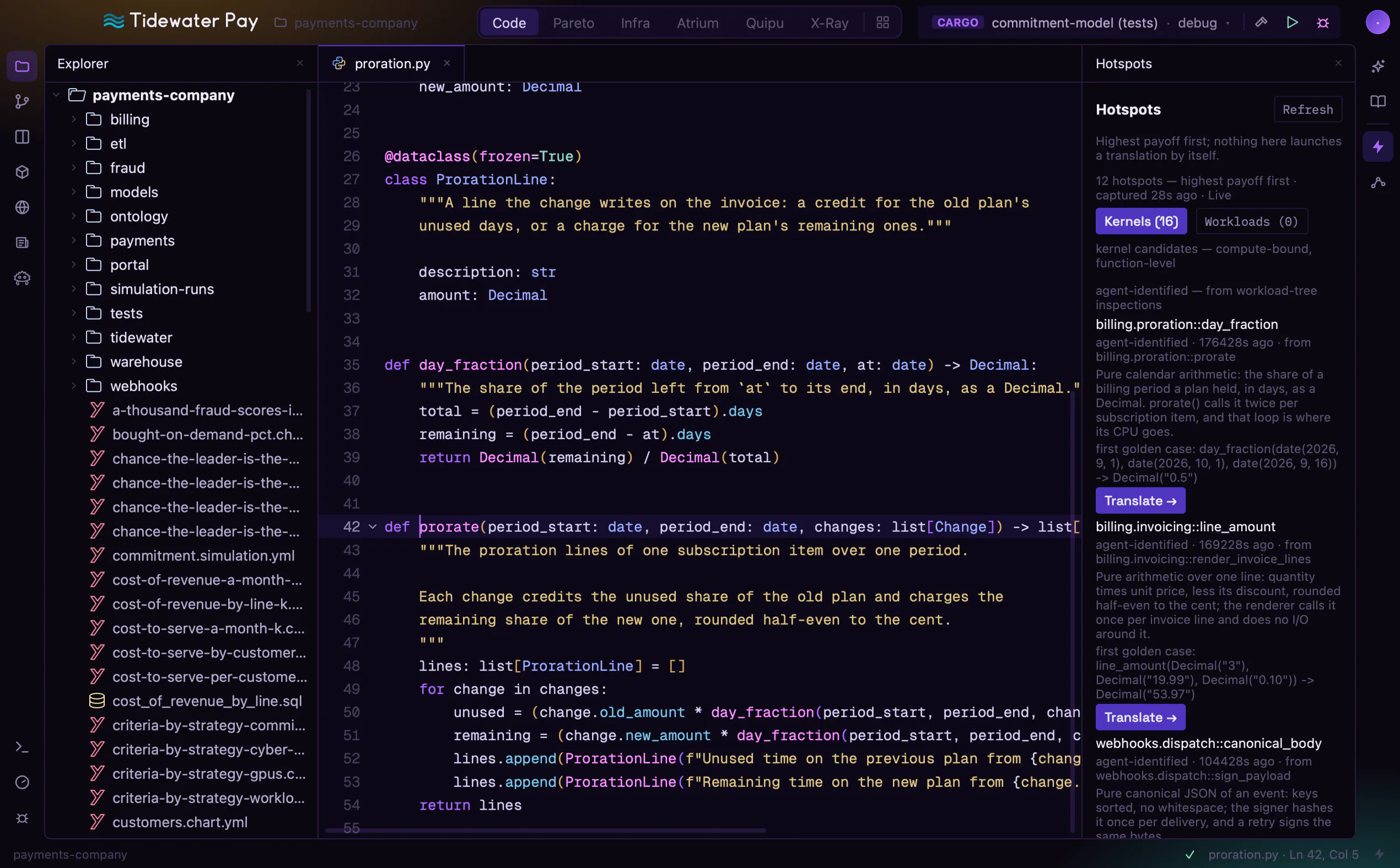
Golden inputs from production, not from a test plan.
- Real inputs and outputs recorded at the seam of the running system, types included
- The first golden case is one call away from the hotspot list
- Every later verdict is judged against what production actually did
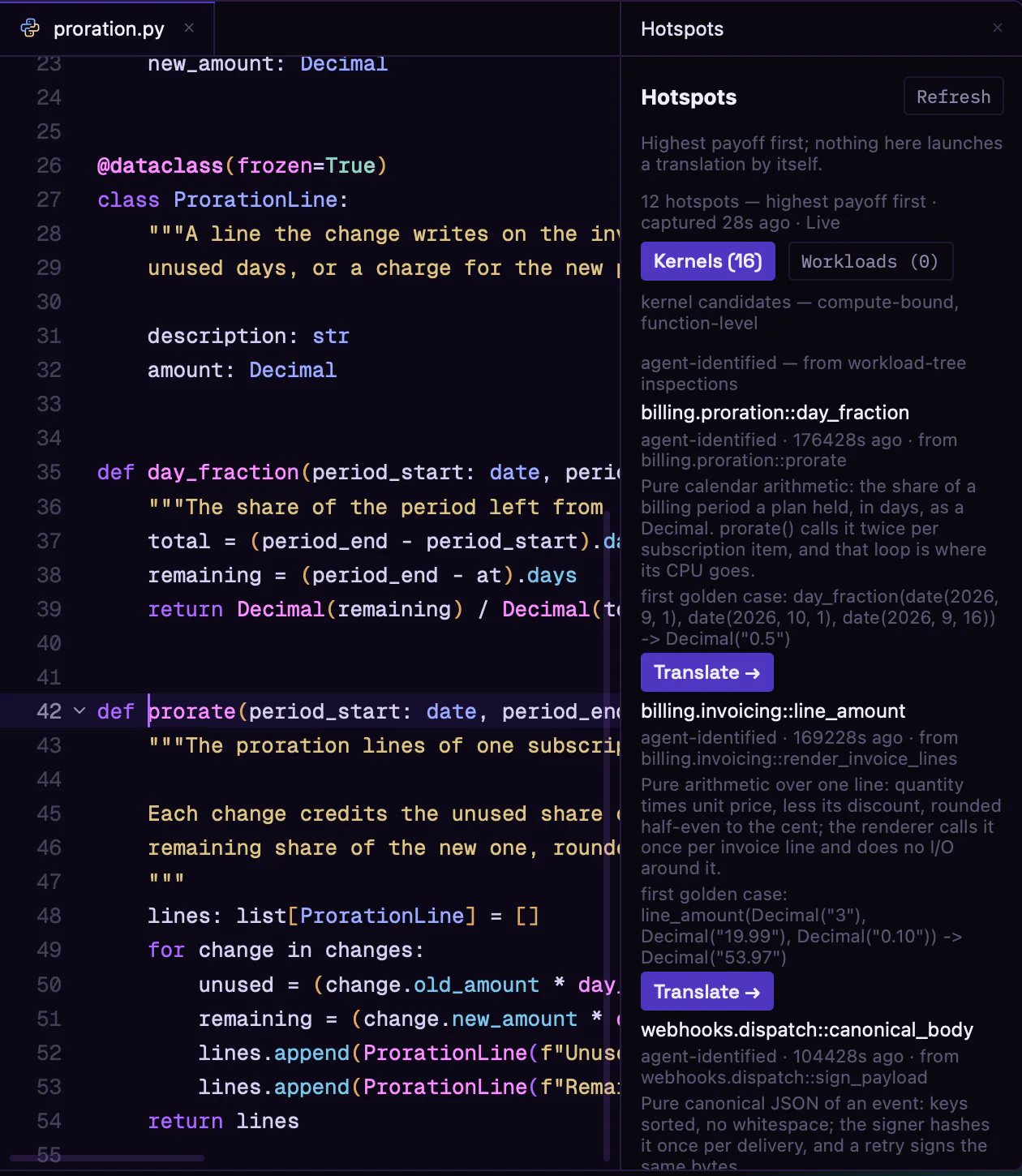
Structure is computed, not hallucinated.
- Module graph condensed, cycles broken and recorded, waves ordered leaves-first
- Deterministic graph work; the model only labels the plan with names and responsibilities
- The plan is the contract every later stage reads
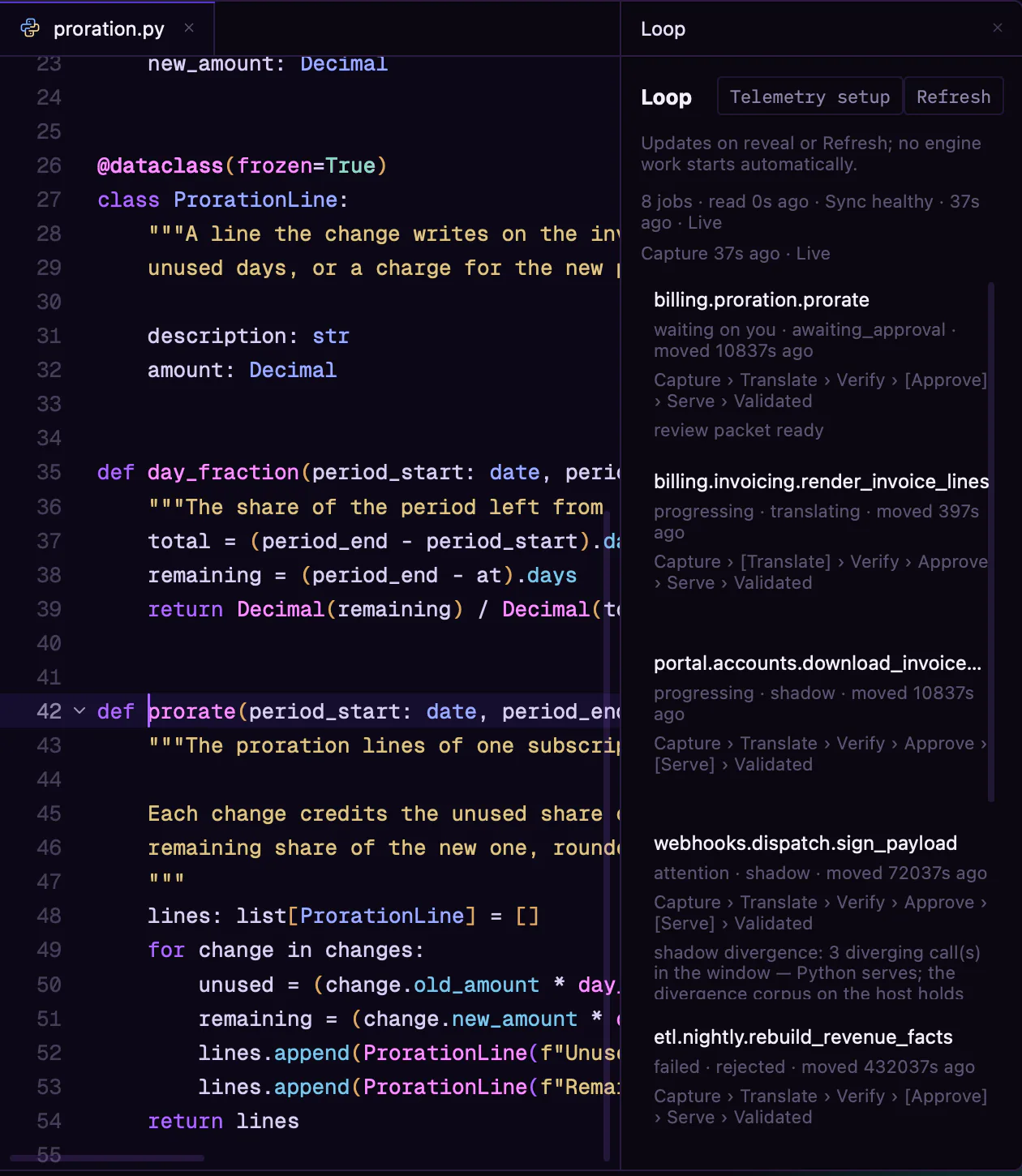
A deterministic skeleton. The model fills the gaps.
- Span-anchored IR with type and ownership inference, so every Rust line traces to its source line
- A knowledge base of crates, idioms and archetypes chosen per unit, with a schema pass for data models
- Content-hashed memo cache: a unit already translated costs zero tokens to run again
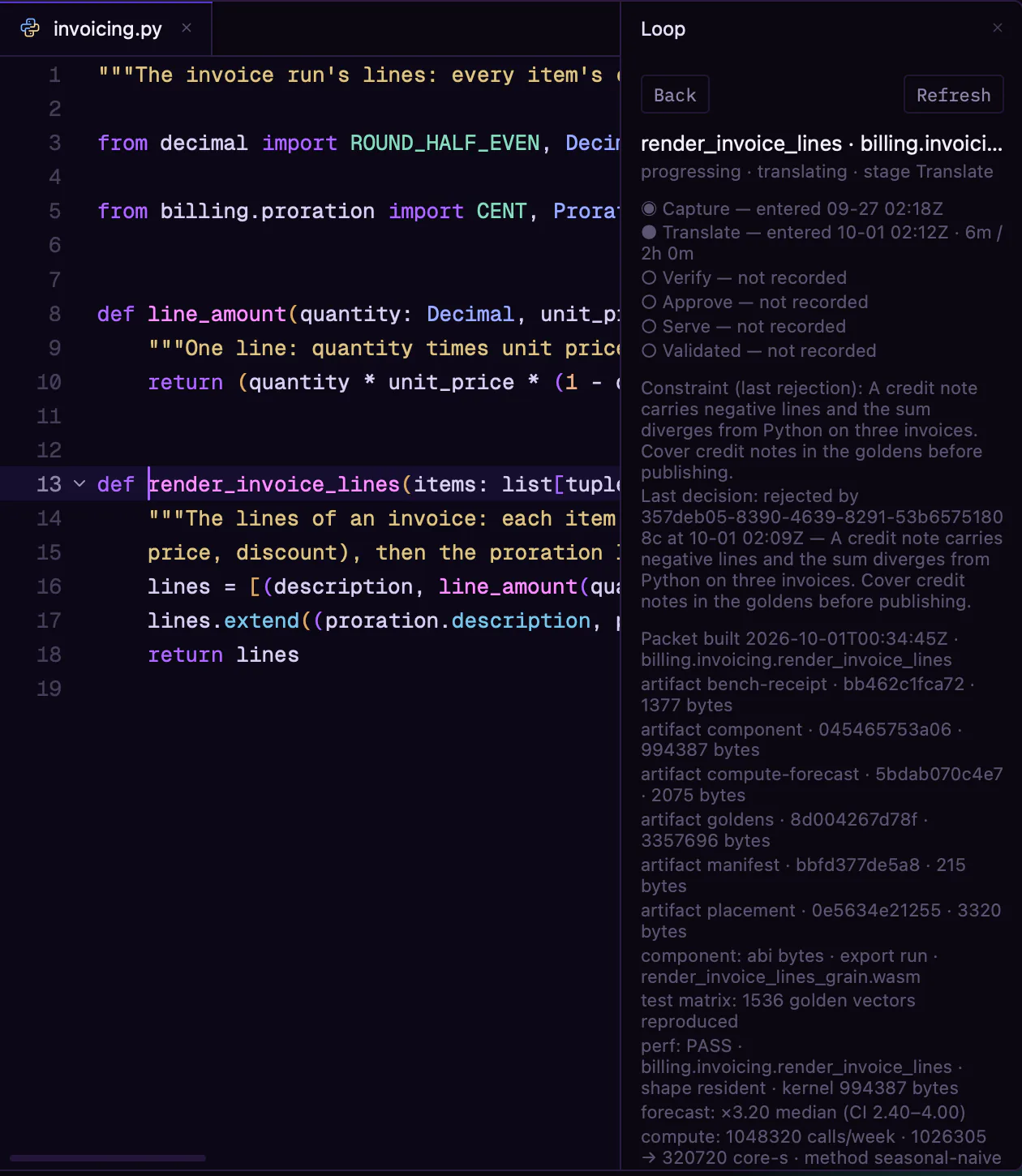
Every behavior checked against the original.
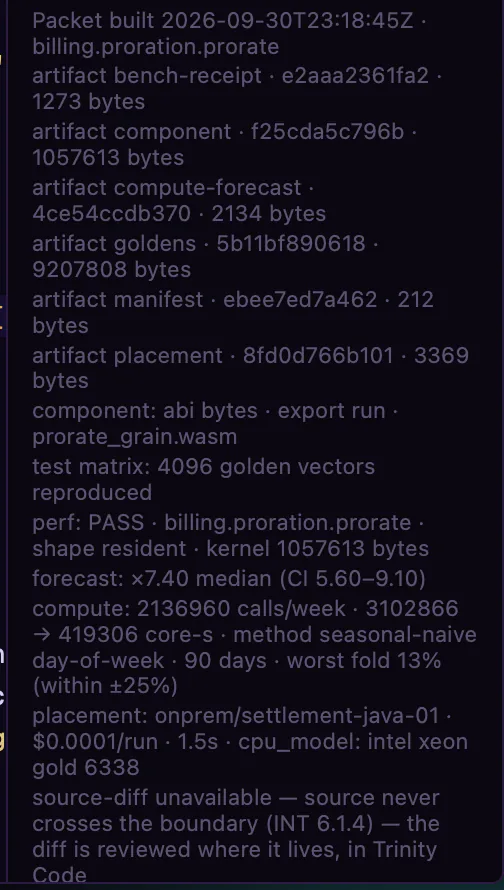
- The original and the translation run on the same inputs, in cleaned environments, offline
- One shared corpus drives equivalence and both timers; verdicts carry confidence intervals, not vibes
- A verdict per unit: verified-equivalent, or it doesn't ship
Three laws for unattended execution.
- Every generated workspace ships a software bill of materials matched against advisories
- Execution tiers decide where a command runs and whether a human must approve it
- Unknown programs go to the strongest tier by construction
Every run, cost and gate on record.
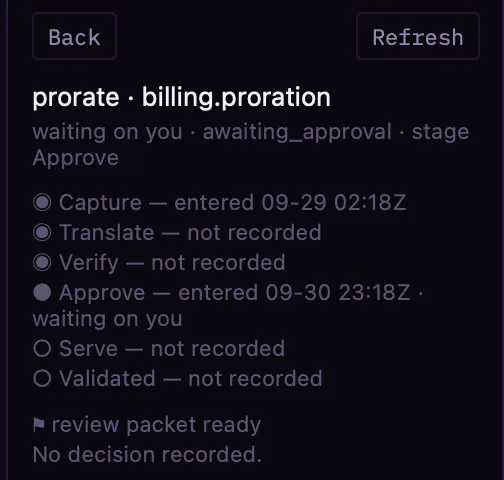
- An append-only ledger of run, cost and gate events per unit
- Metered to the token, so modernization has a bill you can read
- Evidence your auditors can read, not a commit message
BEFORE YOU START
Before you start
Do you wrap legacy code or rewrite it?
We modernize workloads. We don't wrap them. Code is rewritten function by function into memory-safe Rust, and every unit is verified against production inputs before it ships.
Which code qualifies?
Costly, CPU-heavy workloads with stable interfaces first: the ones where the assessment shows the money is going. We pick the workload with you.
What happens if a wave fails?
It rolls back. Waves are planned from the module graph and reversible by design; nothing ships without the equivalence verdict.
What's next
Start with the 48-hour assessment or bring one workload. We agree the scope in the first conversation.